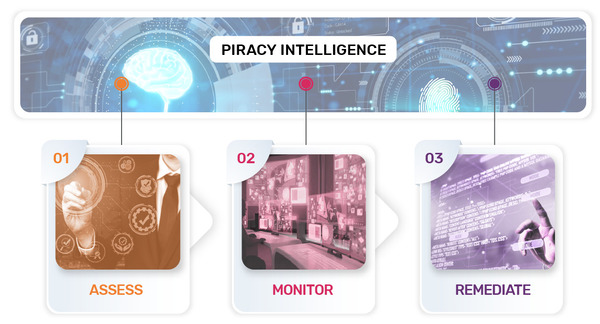
Anti-Piracy is a set of services aimed at extending the security offered by traditional content protection mechanisms such as Conditional Access Systems (CAS) and Digital Rights Management (DRM). These services usually include security assessment of the video delivery chain, monitoring it to detect breaches, and then remediation actions, usually in the form of take down notices and legal actions.
Online piracy is the illegal access and illegal redistribution of video content carried out by video pirates via various technologies. The illegally distributed content is normally premium live and VOD content, which poses a significant threat to the security and earnings of the legal content owners.
Specific anti-piracy law varies from country to country, and even sometimes from state to state. However, they are typically based around copyright laws and these are upheld by most national and international legal systems around the world. Fines for misdemeanors are common, with penalties growing in severity the further up the piracy chain the interception occurs. Organizers of large anti-piracy services can often expect jail sentences.
Online piracy is a problem on several levels: First, it inflicts a huge revenue loss for the legal content owners including creators, companies, and even employees of the music, television, and movie industries. In addition to the billions of dollars lost annually, piracy affects the customer experience, as there is no quality of assurance on pirated sites, ultimately diminishing the content’s value and its brand reputation, while also exposing the end user to various security risks, mainly malware and potentially non-age-appropriate content accessed by children.
Preventing online piracy requires the detection and removal of illegally redistributed content on the open internet. To do that, you would need to research and collect information to identify infringing websites or links, then have these illegal websites delisted by search engines and the illegal videos removed from all types of distribution platforms, including social networks, Cyberlockers, link farms and more.
Put simply, it’s a theft. And it causes tremendous revenue and job losses, and not just for big cooperations either. And if you need another reason, just think that if your favorite content creator suffers the consequences of piracy, he may seize to create it altogether. And that’s an even greater loss.
Yes. But it won’t be easy, and certainly not for you to do it on your own. Piracy has become significantly more sophisticated in recent years and thus the tools to fight it have had to evolve as well. To stop online piracy, you need to make sure your infrastructure is well secured, to constantly monitor threats and detect vulnerabilities and illegally redistributed content on all possible sources, including web, IPTV, STBs, and Apps. A combination of human experts and AI-based automatic searches is recommended, as well as using the latest content security and detection technologies, including dynamic watermarks. Finally, you would need to send take-down notifications to pirate video delivery chain services and have illegal apps removed from the application stores.
From AI moving into daily workflows to a growing reckoning on security, five themes dominated IBC2026. But the industry kept circling back to one question: does this make money, or does it save money?
































.png?width=198&height=150&name=DCA_2023_Shortlist%20(002).png)