
FAST is transforming global streaming, creating new monetization models and demanding operators rethink engagement, personalization, and interactivity as core pillars of future growth.
A Changing Landscape
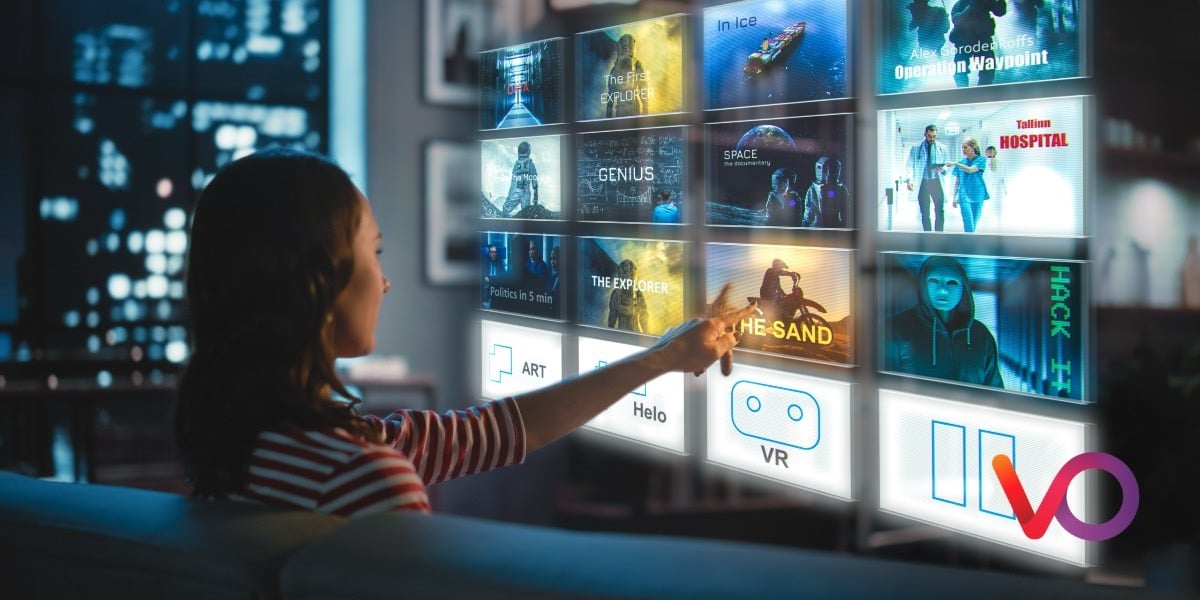
The streaming landscape is changing rapidly. What began as a simple conflict between linear TV and streaming is evolving into something both more complex and dynamic. Free, ad-supported streaming (FAST) is a huge part of this new picture and has transformed rapidly from a niche alternative to a core pillar of viewing behavior.
The US market led the way and it is currently estimated that 45% of all US households now watch FAST services. However, the phenomenon is increasingly global and there is growing engagement worldwide. There are now estimated to be 2012 FAST channels around the globe, up 34% YoY, and the global market is projected to grow from $12.26 billion in 2025 to $27.14 billion in 2030.
The question once was “Will FAST survive?” Now, however, it is more “How will FAST change?” And, as it changes and develops into new niches, how will the rest of the industry evolve and adapt in turn?

How the FAST Ecosystem Is Entering a New Phase
Despite the lines between premium SVOD and FAST becoming ever more blurred, especially in terms of quality, there are still differences. First run series still find their home on SVOD, with second-run and longer-tail content on FAST. SVOD thus remains the premium service, which is reflected in higher CPM rates for its ad-tier options.
Within FAST itself there is a two-speed market emerging. While consolidation is likely for broad, general-interest channels, we are seeing a counter-trend of deeper segmentation. This is very much viewer-led and curated and is the opposite of the all-or-nothing packages that characterized the pay-TV era in particular. Skinny Bundles and Customized Bundles are allowing viewers to assemble lower-cost, personalised packages for themselves that mix specific sports leagues, creator-led linear channels, and niche FAST content.
Taking this a stage further some very interesting new business models are likely to emerge from the creator economy and gaming worlds. These include Creator-Led Linear Channels, where popular influencers will curate 24/7 streams, and Token-Gated Content, which effectively turn subscribers into "members" with ownership stakes. We also expect to see the rise of Immersive FAST channels that mimic the highly successful Roblox experience with virtual goods and interactive chat. These will use micro-transactions for "tipping" or purchasing specific live moments, moving monetization far beyond simple ad breaks and into the heart of the user experience.
The Rise of Lean Forward Content
The potential for Immersive Fast (iFAST perhaps?) indicates that the long-standing assumption that the consumption of premium video is a passive experience is becoming obsolete. For a generation raised on interactive environments such as Roblox and Fortnite, and any number of other titles with active Discord groups, static viewing feels somehow incomplete.
Media organizations are drastically underestimating the Gamification of Viewing driven by a new generation of consumers. For Gen Z and Alpha, passive consumption is boring; they expect agency and interaction. By 2026, simply watching a stream won't be enough.
And the way they watch is changing too. Younger demographics are multi-view natives, and are more than happy to watch multiple channels simultaneously on the same screen.
At the moment, the industry sees interactivity — polls, overlays, co-viewing features — as being optional or “second-screen” additions. This will soon no longer be enough to satisfy consumer demand. Users will expect persistent digital identities, avatars that can "watch" alongside friends in virtual living rooms, and interactive layers that blur the line between a video stream and a video game.
How Do We Measure Success in the New Landscape?
As we move forward into this new era, one key component we have to establish is the way we measure success. The old metrics of eyeballs and number of viewers alone are no longer adequate. What we must also measure is the degree of engagement that customers have with the content on offer.
This is where the concept of the Platform Engagement Index comes in. Rather than counting active customers alone, this is a composite metric that also tracks the depth and sophistication of how a platform is used. It achieves this in a variety of means; by measuring the adoption of AI tools, examining the volume of advanced-features-related API calls, and tracking the activation of real-time audience participation.
A high index score indicates that customers aren't just using a platform as a mere utility pipe for streaming content. Instead it has evolved into something entirely more sophisticated: a strategic growth engine whose success has a direct correlation to long-term customer retention and business health.
The Future is Coming… FAST
By the end of 2026, broadcasters who treat the growth of interactivity as a niche "kid's trend" rather than a fundamental shift in media consumption habits will start to lose relevance. Most are smarter than that, and we will see major broadcasters and platforms increasingly embed interactive layers directly into the primary stream in order to hold the attention of younger demographics.
Certainly it will be fascinating to track the way that Netflix and Warner Bros. Discovery start to leverage their deep library of IP if their merger goes ahead.
At the same time, the distinction between User-Generated Content (UGC) and premium content will erode as platforms curate higher-quality UGC, short-form micro-episodes, and blockbuster titles within the same environment to maintain engagement. We have seen the rise of the creator economy start to intrude on the conversation at what were once stalwart industry-only trade shows such as NAB and IBC. In a year’s time, it might well be a key component of an increasingly FAST-paced future.