VO Industry Insights: Netflix’s advertising business is growing rapidly as the streamer moves past 325 million subscribers, while new research shows creator video taking share and the BBC expands into YouTube-first programming.
Netflix Ad Business Helps Drive it to 325 Million Subscribers
[Netflix]
Netflix famously said it would stop sharing subscriber numbers automatically in its quarterly reports at the end of 2024, only reporting them when they reached a significant milestone. That was precisely what happened at the end of Q4 2025, when the company’s latest figures revealed that it has just broken through the 325 million subscriber barrier.
More than that, it also reported that Q4 revenues were up year-on-year by 18% to just over $12 billion, “driven primarily by membership growth, higher pricing, and increased ad revenue”, as explained in the report.
The mention of ad revenue is interesting. Netflix says that this is growing significantly and is now up to $1.5 billion a quarter. In the accompanying earnings call, the company revealed that ad sales grew by 2.5x in 2025. Furthermore, it expects that number to double again over the course of this year to $3 billion.
Netflix co-CEO Greg Peters ties this growth specifically to the faster rollout of “ad features, ads products, [and] more measurement,” as well as improvements in its own ad tech stack. Now that the ad tier has reached relevant scale, he says the main focus is “increasing the monetization of that growing inventory” and ramping up advertising fill rates over the next few years.
The company estimates that it is only capturing ‘around 7%’ of available consumer ad spend, so there is certainly room for growth.

Netflix also reported that in the second half of 2025, its subscribers watched 96 billion hours of content. This was up 2% year on year and was mainly driven by increased viewing of Netflix originals, which was up 9% YoY.
All of this was very much ahead of Wall St. estimates, but that hasn’t stopped its share price from falling. From a high of $91.46 on January 5, it’s now down at $83.43 at the time of writing amid ongoing uncertainty regarding its all-cash $82.7 billion bid for Warner Bros. Discovery.
Currently it remains the front runner, with WBD’s board and (according to the board itself) more than 93% of its shareholders backing its deal over the rival one from Paramount Skydance. A vote on the matter by WBD shareholders is expected in April 2026, while the US Senate Judiciary Committee antitrust subcommittee is scheduled to start a hearing on the potential competitive impact imminently.
TV & Movie Content Falls Versus Creator Content
A recent study by Hub Entertainment called Video Redefined, has confirmed that, beyond traditional TV and movies, the definition of what comprises “watching TV” is broader than ever.
According to the study, since 2022, weekly TV & movie viewing has declined from 21 to 19 hours per week. Meanwhile, viewing of social/creator video viewing has remained steady at about 11 hours per week, meaning it is taking a greater slice of the audience.
As expected, there is a demographic difference in the audience figures. Well over half of Gen Z viewers watch YouTube on TV, compared to fewer than 4 in 10 viewers age 35+. Even in the over 35s, viewing of social/creator video is on the rise.
One thing that may play in favor of traditional broadcasters, however, is that social video viewing is also associated with guilt in a way that traditional TV doesn’t seem to be. When asked to respond to the statement "I often feel like I'm watching too much social video at places like TikTok or Instagram, and should be watching longer form TV shows and movies instead”, more than half of young viewers agreed.
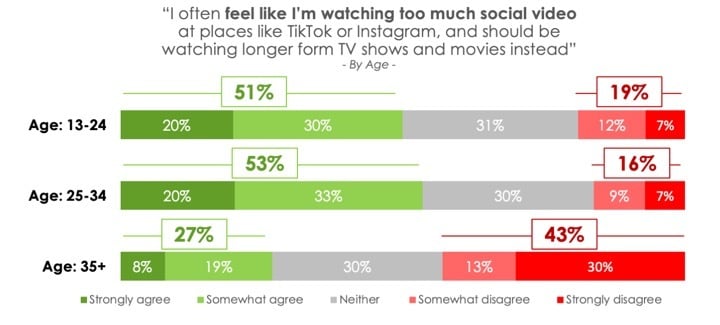
Broadcasters looking to exploit that guilt will have to tread carefully though and make sure they don’t throw the baby out with the bathwater. 65% of viewers age 13-34 say they discover new TV shows and movies from clips they see precisely on places such as TikTok and Instagram.
“Viewers embrace how easy and fun it is to watch social and creator videos at YouTube, TikTok and Instagram,” commented Jason Platt Zolov, study author and Senior Consultant at Hub. “As this content continues to migrate from mobile phones to living room TV sets, there’s great opportunity to develop even more compelling creator programming – as well as unique ways to promote traditional TV and movies via those social platforms.”
BBC to Produce YouTube-First Content
[BBC]
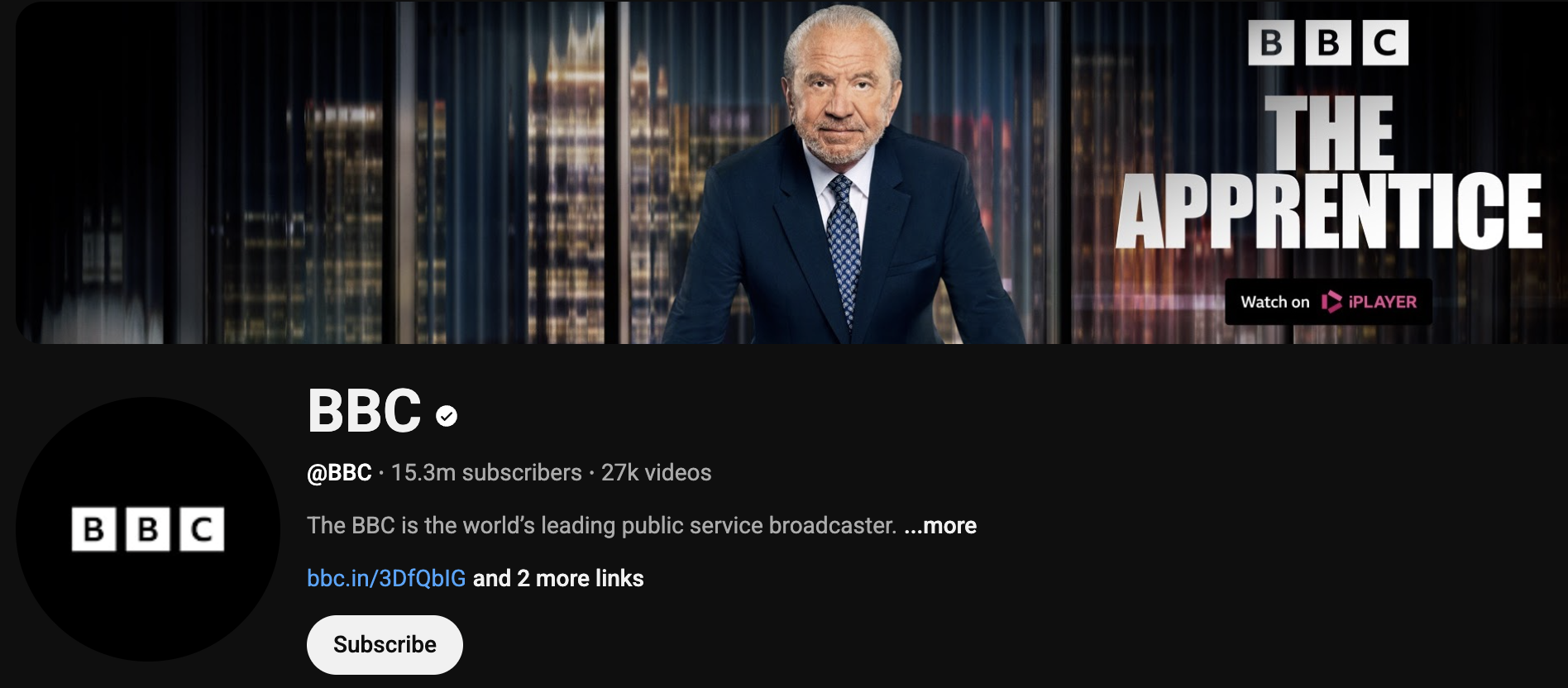 Last year we asked whether YouTube could be the savior of public broadcasting, and now the BBC seems to have decided that the answer is a firm yes.
The UK public broadcaster has announced a new partnership with YouTube, that will see the BBC produce original, YouTube-first content as part of a wider push to reach younger audiences and expand its digital presence. Under the agreement, the BBC will develop bespoke programming, specifically designed for the platform, moving beyond its previous approach of mainly sharing clips and promotional material.
The corporation said the deal will involve investment in new entertainment, news and sports content, with some programs also made available — presumably as second-run content — across BBC iPlayer and BBC Sounds. The partnership is also expected to generate additional revenue through advertising for viewers outside the UK, at a time when the BBC’s long-term funding model remains under review.
Alongside content production, the agreement includes a creator training initiative aimed at supporting the next generation of UK media talent, with workshops and development programs backed by industry partners.