
The Netflix and Paramount bids for Warner Bros. Discovery could reshape streaming, sports rights, and Pay-TV. Here are the likely winners and losers of each scenario.
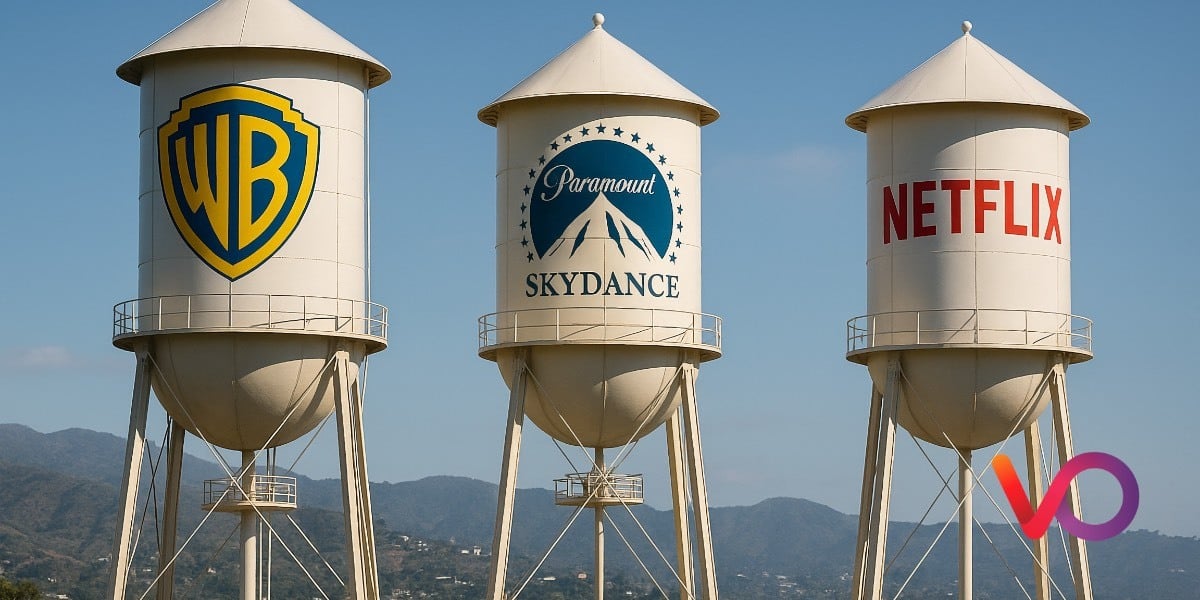 The news last week that Netflix was the winning bidder for Warner Bros. Discovery’s (WBD) studio assets, as well as HBO and HBO Max, sent shockwaves through the industry. In one giant merger it creates a streaming superpower with what are estimated to be over 400 million subscribers and some of the most valuable IP in the industry from Game of Thrones to Stranger Things to Citizen Kane.
However, it is not the end of the story. Netflix hopes to complete the $83.7 billion acquisition in 18 months. But, almost before the ink was dry on the press release announcing the deal, another bidder, Paramount Skydance, stepped forward with a rival $108.4 billion offer made directly to shareholders. And in a picture complicated by concerns over accurate valuation of the businesses involved, regulatory pressures, and even Presidential whim, the outcome remains deeply uncertain.
Warner Bros. has changed hands four times in the 21st century so far, either directly or as part of a larger deal, and each time the sale has had a definite impact on the rest of the industry. All previous merger and acquisition activity is dwarfed by the potential consequences this time round, however.
This is our list of the potential winners and losers depending on who the new owner of WBD turns out to be, — Option 1, Netflix; Option 2, Paramount Skydance — with a quick summary table to begin.

Option 1: The Winners if Netflix Buys WBD
This is a surprisingly short list, and is possibly topped by operators seeking bundle partners for aggregated services. Netflix/WBD concentrates a lot of IP in one package, and its inclusion in any bundle can be considered as a cornerstone service. Of course, it will realize its enhanced ‘must-have’ position and leverage its market dominance to its advantage when it comes to negotiating deals.
The new entity will have enormous purchasing power. Those that get to be its preferred vendors in the production chain, everyone from VFX studios to anti-piracy providers, will benefit hugely. However, such consolidation also leaves others out in the cold.
For consumers, it plays directly into the trend towards aggregation and the idealised single super-service. It also unlocks straightforward global access to HBO Max content. However, the price rises could be substantial.
Option 1: The Losers if Netflix Buys WBD
As the extremely unhappy reaction to news of the deal from the Hollywood establishment and unions worldwide shows, much of the established media industry is seriously threatened by the creation of Netflix WBD. Theatrical windows will inevitably shrink as WBD movie content starts its pivot towards prioritising streaming subscribers, impacting the entire cinema chain; Pay-TV operators will lose HBO content (though arguably the global rollout of HBO Max in 2026 was accelerating this already); independent production companies will have fewer buyers for scripted series; and the new company’s ability to vertically integrate will pull many productions in-house. Netflix WBD will also have such a storied catalogue of market-leading IP, that impetus to develop new shows will inevitably suffer.
For other SVOD providers the consequences could be dramatic. While niche services offering identity-based, highly curated content are largely insulated, those focused more on general entertainment suddenly have a fearsome competitor in their midst. Netflix WBD will drive up consumer expectations for catalogue depth, originals quality, and release cadence. Content acquisition costs will rise too as large libraries consolidate under fewer rights holders. Competing directly with such a player becomes close to impossible.
As differentiation becomes more difficult, so smaller SVODs will have to double down on what sets them apart, whether that be local originals, sports rights, or strategic bundling beyond the OTT ecosystem. It is not an extinction-level event, but there will be many changes and challenges in retaining market share
Cinema-goers will face reduced choice, while subscribers will have to deal with subscription price rises. A narrower content production ecosystem also tends to lead to fewer creative voices as the mid-budget content disappears and takes content diversity with it.
Option 2: The Winners if Paramount Skydance Buys WBD
This category essentially features those who would lose under the Netflix arrangement. A Paramount WBD does not concentrate resources into streaming in such a way. That means that smaller streamers could continue to flourish in a still fragmented market. There would be less subscriber migration to a new giant, less pressure on bundling, lower content inflation, and more room for niche and lower tier platforms.
Pay-TV operators would still be able to offer (or bundle) HBO Max, theatrical first movie windows would persist, and while there will likely be some economies of scale, there would be less damage to the labour market.
For consumers it would probably only have the same sort of minimal impact that the changes of WBD ownership have had in the market over the past couple of decades.
Option 2: The Losers if Paramount Skydance Buys WBD
Oddly enough, Paramount Skydance can be potentially considered one of the losers here. It becomes simultaneously very large in studio terms, but underpowered when it comes to being a global streaming power. The extra money it is offering WBD shareholders also increases its debt burden too.
The US Theatrical market doesn’t lose as much as it does with the Netflix acquisition, but one fewer distributor will still lead to some contraction in the market. Slates will be rationalized and, again, the mid-budget releases will be under pressure.
For consumers, it eases fragmentation but far more marginally than bringing WBD under the Netflix umbrella. Again, they can expect to see costs rise to help finance the acquisition (though neither Paramount+ or HBO Max are seen as quite the must-haves as Netflix is).
Where Does Sports Fit In to the Picture?
As it stands, WBD’s sports properties such as TNT are not included in the Netflix deal but are for Paramount. This seems to disadvantage Netflix, which spends a lot of money to acquire WBD’s non-sports assets but gains no foothold in what is becoming an increasingly important area for all global-scale streamers.
Paramount Skydance meanwhile instantly becomes a tier-one sports streamer in Europe and elsewhere if its deal is successful. It also has a clear differentiation between itself and other high-profile streaming services that are still building portfolios in the sports space. Arguably, for Paramount the WBD sports portfolio could well turn out to be the jewel in the crown of the whole deal.
The Bottom Line: No Perfect Outcome
While both acquisitions are liable to be disruptive, they are different orders of magnitude. Netflix WBD would centralise the industry and consolidate a huge amount of subscribers, IP, library content, and more into a single entity. Paramount WBD, on the other hand, maintains the status quo to a much greater degree; there is concentration in some areas but fragmentation remains.
Possibly neither outcome is wholly ideal for the industry or consumers, so a lot of people will be following the twists and turns with some interest as either edge towards the finishing line.